



Applying social work concepts and predictive models to Understand and Guide improvements to Community Resilience
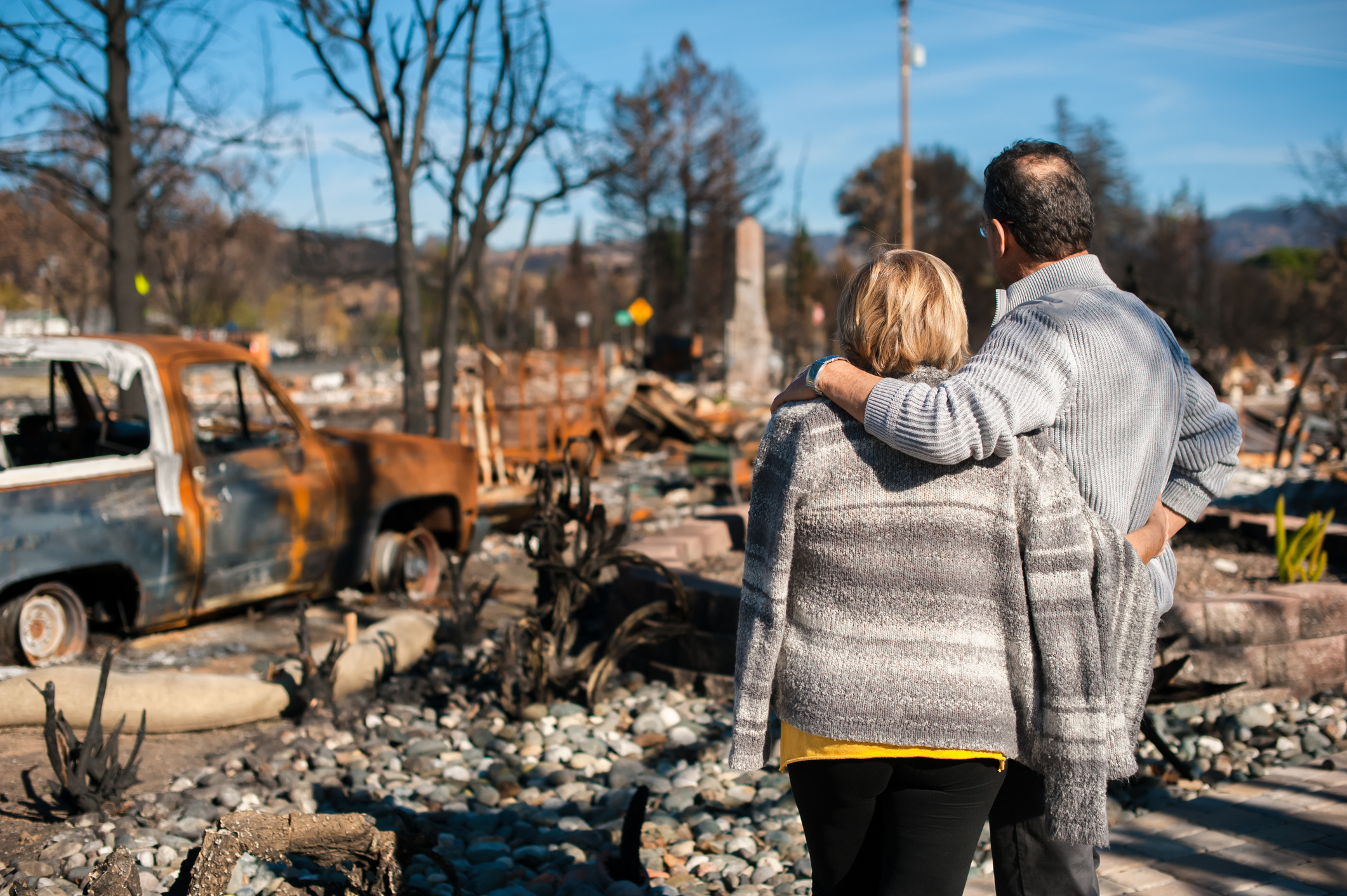
Hurricanes, earthquakes, wildfires, and other natural disasters are increasingly devastating our environment [1]. In January 2025, the Los Angeles wildfires directly caused 31 deaths and over 16,000 home damages [2], with long-term impacts, including increased deaths related to the fires [3]. While studies have focused on pre-existing social capital as resilience, emergent forms like mutual aid and collective action [4] remain understudied, despite their vital role in crisis response.
Communities’ unique knowledge and resources are crucial for developing adaptive strategies to mitigate disaster impacts. Given the rising frequency of environmental disturbances and their projected increase in severity [5, 6] there is an urgent need to understand community crisis resilience (CCR) and empower communities during disasters. Tools for measuring social-psychological context in crisis response are critical yet have not been operationalized in the immediate aftermath of disasters, making their development a priority for public health and safety [7].
Goals
With a focus on community-level resilience, the proposed study aims to develop and validate a measure of social-psychological context for CCR in the immediate aftermath of a natural disaster. We plan to create a predictive risk (machine learning) model that uses multimodal (individual-level and geographic) data to identify persons at greatest risk for poor crises outcomes (as measured by low CCR) and those likely to show resilience behaviors (as measured by high CCR).
Methods
By applying advanced machine learning to analyze data on environmental factors, infrastructure, geography, together with social psychological community contexts, we will identify barriers and facilitators of CCR. These insights will provide actionable recommendations for policymakers and community leaders, guiding data driven interventions and preparedness strategies.

Bistra Dilkina
Michàlle Mor Barak
Kyla Thomas
Shinyi Wu
Meghana Nallajerla
Eric Rice (University of North Carolina, Chapel Hill)
Cordula Barzantny (Toulouse University, France)
Gil Luria (University of Haifa, Israel)
Miriam Aczel (United Nations University, Ontario, Canada)
Jiyang He
Shruti Natala
Jay Campanell
Marcela Lopez
USC Office of Research and Innovation Zumberge Preliminary Studies Research
Southern California Environmental Health Sciences Center (SCEHSC)
- USC Suzanne Dworak-Peck School of Social Work, November 10, 2025, “Researchers use AI to study community resilience in the wake of L.A. wildfires“
- French, C.C., America on fire: climate change, wildfires & insuring natural catastrophes. UC Davis L. Rev., 2020. 54: p. 817.
- Associated Press. (2026, January 7). A year after the LA wildfire disaster, key numbers show how it unfolded and the toll left behind. PBS News. https://www.pbs.org/newshour/nation/a-year-after-the-la-wildfire-disaster-key-numbers-show-how-it-unfolded-and-the-toll-left-behind
- Masters, J. Indirect death toll from the L.A. fires may end up in the thousands. 2025; Available from: https://yaleclimateconnections.org/2025/01/indirect-death-toll-from-the-l-a-fires-may-end-up-in-the-thousands/.
- Ntontis, E., et al., What lies beyond social capital? The role of social psychology in building community resilience to climate change. Traumatology, 2020. 26(3): p. 253.
- Kc, B., et al., Multi-hazard climate risk projections for the United States. Natural Hazards, 2021. 105: p. 1963-1976.
- Burke, M., et al., The changing risk and burden of wildfire in the United States. Proceedings of the National Academy of Sciences, 2021. 118(2): p. e2011048118.
- Grasso, D.J., et al., The epidemic–pandemic impacts inventory (EPII). University of Connecticut School of Medicine, 2020.
- Cretney, R.M., Local responses to disaster: The value of community led post disaster response action in a resilience framework. Disaster Prevention and Management, 2016. 25(1): p. 27-40
- Imperiale, A.J. and F. Vanclay, Experiencing local community resilience in action: Learning from post-disaster communities. Journal of Rural Studies, 2016. 47: p. 204-219.
- Gil‐Rivas, V. and R.P. Kilmer, Building community capacity and fostering disaster resilience. Journal of clinical psychology, 2016. 72(12): p. 1318-1332.
- Chapman, D.A., et al., Psychological perspectives on community resilience and climate change: Insights, examples, and directions for future research, in Psychology and climate change. 2018, Elsevier. p. 267-288.